Museo del Prado
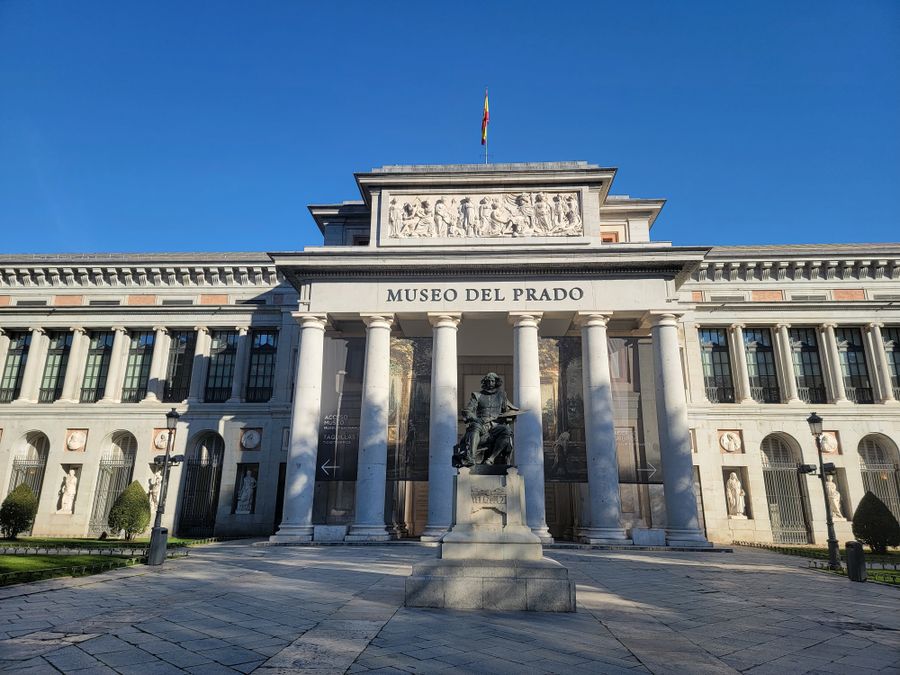
The Prado is Spain's national art museum, on the Paseo del Prado in central Madrid. It is built around the Spanish court painters, above all Velazquez and Goya, with deep holdings of Bosch, Titian and Rubens alongside them.

The Prado is Spain's national art museum, on the Paseo del Prado in central Madrid. It is built around the Spanish court painters, above all Velazquez and Goya, with deep holdings of Bosch, Titian and Rubens alongside them.
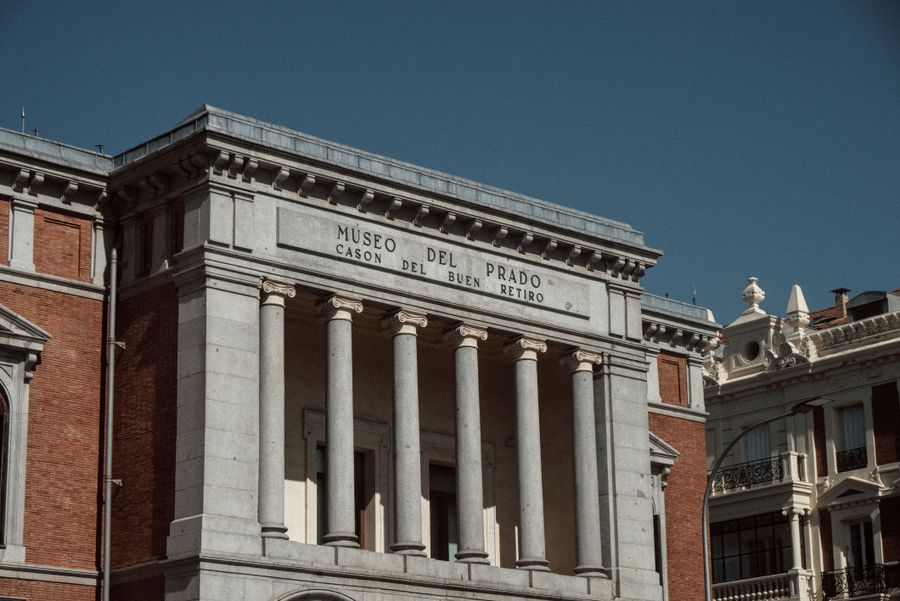
Las Meninas is the painting most visitors come for, hung in a room of its own context alongside The Surrender of Breda and the royal portraits.
The Third of May 1808, the tapestry cartoons, the Clothed and Naked Maja, and the dark, unsettling Black Paintings moved here from his house.
The Garden of Earthly Delights triptych is the star of a strong northern European collection that also includes Rogier van der Weyden's Descent from the Cross.
General admission is a modest fixed price. The Prado offers free entry for the last two hours each day, which is busy and does not include the temporary exhibitions. Confirm prices and free hours on museodelprado.es.

The collection is enormous. Picking ten or fifteen works, or taking a themed guided route, beats trying to walk every gallery.
The last two hours are free but crowded and rushed. If you want space around Las Meninas, a paid daytime ticket is worth it.
The Thyssen-Bornemisza and the Reina Sofia, home of Guernica, are both a short walk away and make up Madrid's Golden Triangle of Art.
Is the Prado ever free?
Yes, for the last two hours of opening each day. It is popular, the queue forms early, and temporary exhibitions are not included.
Should I book ahead?
Booking a timed ticket online saves queueing, especially at weekends and in the tourist season.
How much time do I need?
Two to three hours for the highlights. A serious visit covering several schools is a half day.
Can I take photographs?
No. Photography is not permitted inside the galleries of the Prado.
The Museo del Prado opened to the public in 1819 in a Neoclassical building by Juan de Villanueva on the Paseo del Prado in Madrid. Its collection grew from the Spanish royal holdings.
It is strongest in Spanish painting, with the largest bodies of work by Velazquez and Goya anywhere, and holds major Italian and Flemish works including Bosch's Garden of Earthly Delights. With the Thyssen-Bornemisza and Reina Sofia it forms Madrid's Golden Triangle of Art.
This page is an independent guide for visitors, covering the Museo Nacional del Prado.
